Welcome to the Christian Business Growth Podcast where faith meets entrepreneurship. Each episode, we uncover the strategies, stories, and spirit-led insights that help Christian business owners align their goals with God’s call. From practical tips to real-life testimonies, we explore what it takes to build a business that honours Christ, serves others, and impacts the Kingdom.
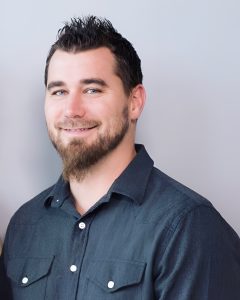
When God Uses Your Pain: A Neurochiropractor’s Calling to Heal and Teach
with Doctor Jason Kramer
How Dr. Jason Kramer Built a Faith-Driven Practice Around the Nervous System and Natural Health
Episode Summary
In this episode of the Christian Business Growth Podcast, Rev. Lyle sits down with Dr. Jason Kramer, a neurochiropractor and founder of Revolution Chiropractic in the Dallas area. What started as a college car accident and a routine chiropractic visit turned into a lifelong calling: helping people restore their God-designed health by removing interference in the nervous system.
Dr. Jason shares how he discovered chiropractic as more than “back cracking,” why he believes “God created the body, God heals the body,” and how his practice integrates prayer, daily devotionals, and genuine community connection.
If you’re a Christian entrepreneur wrestling with how faith fits into a “non-ministry” business, or you’re curious whether chiropractic care can align with your biblical worldview, this conversation will encourage you to:
- See your skills as a way to teach and serve.
- Treat the nervous system—and not just symptoms—as a God-designed system.
- Build your business around connection, community, and calling, not ego.
💬 Highlight Quotes
“God created the body. God heals the body. The chiropractor’s job is to remove interference and get out of the way.”
“Pain is a symptom. If there’s a symptom, there’s something wrong with the system—and every system is controlled by the nervous system.”
“Sometimes it’s not about asking God to keep us out of the storm, but trusting He’s with us through the storm.”
“You can do your hobby, do what you love, and still make it part of your calling to serve people and build community.”
From Car Accident to Calling
Rev. Lyle:
Hello and welcome to the Christian Business Growth Podcast. I’m here with Dr. Jason—let’s put that word together—Dr. Jason Kramer. He’s a neurochiropractor. He does things differently.
I’ll be honest: I’ve had problems with my neck. I’ve been to chiropractors. And a lot of Christians wonder, “I’m a Christian—am I really allowed to go to a chiropractor? Is that legitimate medicine?”
We’re going to have an open, frank conversation about that.
But first, Dr. Jason—welcome. Tell us your story. How did you get started in business?
Dr. Jason Kramer:
Thanks for having me, Lyle. I’m excited about this.
My business really started before I officially became a chiropractor. I was in undergrad when I got into a car accident. And I did what everyone does—you go see a chiropractor, right?
In my mind, chiropractic was just for:
- Back pain
- Neck pain
- Headaches
- Car accidents
That’s all I thought it was.
So I go see this chiropractor. Long story short, he’s a smart aleck like I was at 20. He asks me, “What do you actually want to do with your life?”
I said, “I’m not totally sure. I want to do something in health. I’ve always cared about natural health. But I’ve also thought about being a teacher.”
He said, “A teacher?”
I said, “Yeah. Everyone can remember that one teacher who impacted them. I want to be that kind of person. I want to make a difference.”
He looks at me and says, “If you really want to make a difference, you’ve got to be a chiropractor.”
I was like, Sure, okay. I figured chiropractors help people get out of pain—that’s great—but I meant on a deeper level.
He said, “Come shadow me for one afternoon. Just see what you think.”
So I did. And what I saw changed everything.
Yes, there were people in pain. But there were also:
- Kids on the spectrum
- Babies with colic
- People with asthma and allergies
- Digestive issues
- Moms with infertility
- Patients with chronic headaches, migraines, blood pressure issues
I thought, What in the world is going on? Either he’s tricking me, or there’s some kind of voodoo happening.
He said, “No voodoo. Here’s the thing:
The nervous system controls every single thing in your body. God created the body. God heals the body. The chiropractor’s job is to remove interference and get out of the way.
That clicked for me. I thought, I can get on board with that. I can do that.
From that point on, that’s how everything started for me.
A Healthcare “Revolution”
Dr. Jason Kramer:
Fast forward—I go through chiropractic school, seminars, all of it.
One of the big things we study is health statistics. And frankly, as a country, we’re not doing very well.
We make up a small percentage of the world’s population, but we:
- Spend an enormous amount of money on “healthcare”
- Take more pills, medications, surgeries, and procedures than anyone else
And yet, we’re one of the sickest industrialized nations.
That lit a fire in me.
If what I was seeing in that office was real, and if these statistics were real, we need change. We need what I wrote in my notes back in school:
“We need a healthcare revolution.”
That’s where Revolution Chiropractic came from.
We practice natural health as best we can. Our entire job is to:
- Correct interference in the nervous system
- Get out of the way
- Let the body—designed by God—self-regulate and self-heal
We’ve been doing that for about 14 years now.
What Makes Neurochiropractic Different?
Rev. Lyle:
You and I have talked about this—everyone lives in a box. We type in front of us, drive in front of us, cook in front of us. Our bodies move in this tiny range all day.
The adjustments you’re doing help our bodies move and function better.
You’re not the classic “cracking back” chiropractor. You do something different because you see the body as created by God—strategically and intelligently.
Explain that a bit.
Dr. Jason Kramer:
Sure. I jokingly tell patients:
You can teach a monkey to do chiropractic if all you do is point to where it hurts and push really hard.
But we want to step back and ask:
What caused that pain in the first place?
Pain is a symptom. If there’s a symptom, something is wrong with the system of the body. And every system of the body is controlled and coordinated by the central nervous system.
So we go back to the nervous system.
We have some pretty cool Grade 3 medical equipment here that scans and assesses the nervous system. We can see:
- Which “fuses” are blown—just like a breaker box
- Which ones are about to blow or are overworked
Then we can make specific, gentle adjustments to those areas to restore communication between the nervous system and the rest of the body.
When that communication improves, the system improves. When the system improves, there’s no reason for the symptom to stick around—so the pain often goes away.
It’s not magic. We’re simply working with the way God designed the body.
We test, treat, and then retest to see if we’ve made a difference.
Rev. Lyle:
What do you call this style of chiropractic? If someone isn’t in the Dallas area but wants to search for something similar, what should they look for?
Dr. Jason Kramer:
Great question. I’d tell them to search for:
- Neurochiropractic
- Neurotonal chiropractic
- Or tonal-based chiropractic
It’s a bit different than completely hands-off, and also different from being very forceful.
It’s about reading the nervous system and giving it the type of correction it actually needs.
Growing a Business Without Growing Your Ego
Rev. Lyle:
How do you listen for God in your business decisions?
Dr. Jason Kramer:
We had a great example just recently.
We were approached about being on a TV show—something like “World’s Greatest”—and highlighting a chiropractor.
At first, our ego loved it:
- “We’re the world’s greatest? This is amazing!”
- “National TV? This will be great marketing.”
We went through the interview process, heard the pitch, and as a team, we got really excited.
Then we took a breath. We prayed. We asked:
Is this really meaningful, or is it mostly ego?
We realized the primary purpose would have been, “Look at us. Look at what we’ve done.”
So yesterday, we turned it down.
It wasn’t that TV is bad. It was that, for us, in this moment, it wasn’t aligned with what God was asking us to do.
That’s the kind of thing we try to bring before God—big or small.
And again, our daily devotionals help us ask:
- What do we need to change?
- What do we need to stop doing?
- What do we need to start doing more of?
It’s a lot of little, daily decisions—just like that show title: “A Million Little Things.” Those little decisions aren’t so little over time.
Business Growth: Connection as Strategy
Rev. Lyle:
Let’s shift into business growth. What are you doing right now that’s actually growing your business—and what might help other Christian entrepreneurs?
Dr. Jason Kramer:
We’ve tried a lot over the years.
We’ve done:
- External marketing
- Weekly community events
- Health screenings at local events
We’re really big on community. Our vision as an office is:
To create connection in order to build community through the best chiropractic care we can offer.
What we’re seeing right now is that intentional connection is powerful.
Not just general connection—though that matters—but:
- Connection with like-minded partners
- People who share your values
- People who want you to succeed, and you want them to succeed
For us, that means:
- Other natural-minded healthcare providers
- Business owners who care about holistic, God-honoring wellness
- People we can truly collaborate with
We seek these people out:
- On websites
- On social media
- In local organizations
We’re not just collecting business cards. We’re building relationships that benefit:
- Us
- Them
- The community we both serve
Using Your Hobbies as Ministry
Rev. Lyle:
You’re also hosting community events—like your barbecues. How does that impact your business?
Dr. Jason Kramer:
Those are some of my favorite things we do.
We host a big barbecue twice a year. The big one is usually in September.
We invite:
- Patients
- Their families
- Friends
- Neighbors
- Even their parents or out-of-town guests
We tell them:
You don’t have to be a patient to come. Just come. We want to love on you and feed you.
Yes, we’re a business. But these events aren’t “sales funnels.” They’re expressions of who we are:
- We love gathering people.
- We love feeding people.
- We love hearing their stories.
Cooking is one of my hobbies. I smoked a brisket last night, actually—overnight, now it’s resting in a cooler. I also pickle green beans that I jokingly call “world famous.”
We do everything:
- All-natural
- Organic
- No preservatives
- Sugar-free
Why? Because when you read packages in the store, you realize how much of that stuff will harm you.
So I get to:
- Do what I love (smoking meat, pickling, cooking)
- Do it in a way that honors people’s health
- Use it as a base for building community
I also thought I’d be a teacher someday. I later learned that “doctor” actually means “teacher.”
So now I get to:
- Teach
- Cook
- Provide care
- Build community
All in one place. It’s not the path I expected, but it’s exactly the kind of thing I always wanted to do.
The Power of Connection (for Health and Business)
Rev. Lyle:
What’s one bit of wisdom you want to leave us with?
Dr. Jason Kramer:
Connection.
There’s a famous long-term health study—one of the largest ever. It’s been going for nearly 100 years.
They studied two main groups:
- People who grew up with very little during the Great Depression
- People who were very well-off financially
They tracked these people (and later, their spouses) over decades—asking health questions and watching their lives.
What they found as the #1 predictor of quality of life and longevity wasn’t:
- Where they grew up
- How much money they had
- What career they chose
It was connection.
The people who lived the longest, healthiest lives were the ones with the strongest relationships.
I think that’s amazing.
If we, as Christian entrepreneurs, can:
- Build real connection
- Prioritize community
- Serve people with what we’re gifted to do
Then our businesses become more than income streams. They become kingdom tools.
Rev. Lyle:
I think that’s why church is so important. It’s that instant connection, that shared foundation.
How can someone get in touch with you if they’re in the Dallas/Plano area—or just want to learn more?
Closing Thoughts
Dr. Jason’s story is a powerful reminder that God can take:
- A car accident
- A desire to teach
- A love for natural health and barbecue
…and turn it into a calling that blesses people physically, emotionally, and spiritually.
As Christian entrepreneurs, we’re not just building businesses—we’re stewarding gifts, relationships, and influence. When we build around God’s design, whether it’s the nervous system or our business model, growth looks less like grinding and more like aligning.
If this conversation encouraged you, share it with another Christian entrepreneur who needs to be reminded that faith, health, and business can all fit together under Christ’s leadership.
And if you haven’t yet, subscribe to the Christian Business Growth Podcast so you don’t miss more stories of faith-filled business owners living out their calling.
Connect with Jason Kramer
Instagram: @RevolutionChiropracticDallas
Facebook: Revolution Chiro
YouTube: Revolution Chiropractic Texas
Website: revolutionchiropractor.com
Phone (Plano, TX): 972-599-7064
Full transcript here
Rev. Lyle
Hello and welcome to the Christian Business Growth Podcast. I'm here with Dr. Jason. Dr. Jason—let's put that word together. He's a neurochiropractor. He does things different.
Now, I'll tell you honestly, I've had problems with my neck. So if you see me doing this, that's what that is. I've gone to chiropractors, and a lot of Christians are like, “I'm a Christian. Am I really allowed to go to a chiropractor? Is that legitimate medicine?”
So we're going to have an open, frank conversation. But first I want to hear: Dr. Jason, welcome, and tell us your story. How did you get started in your business?
Dr. Jason Kramer
Thanks for having me, Lyle. I'm excited about this.
The business got started years ago. It probably started in the making before I even became a chiropractor. A very brief story of how I got into this and how it all started: I got in a car accident when I was in undergrad.
I did what everybody does when they get in a car accident—you go see a chiropractor, right? That's what chiropractic is for. It's for back pain, neck pain, headaches, car accidents. That's the only thing I thought it was for.
So I ended up seeing one, and this guy says—long story short, he's a smart aleck just like I was, I was 20 years old—“What do you actually want to do with your life?” We're just BS-ing together.
I said, “Well, I'm not really sure. I want to do something in health because I've always wanted to be healthy and natural health has always been important. But…I kind of want to be a teacher. I’ve thought about doing that for a while.”
He says, “Teacher?”
I said, “Yeah. Everybody can remember one of those teachers that they've had way back in the day. You can probably—even you, Lyle—remember one right now. If you think of a teacher back in the day, you can probably think of the influence they had on you or even remember their face. I can do the same. Mine was my fifth grade teacher. I'd actually go back when I was in high school and even back from undergrad and just have chats with her. So I kind of wanted to be a teacher.”
He says, “Why?”
I said, “Because I want to make a difference. I think that'd be really cool. I want to be one of those people.”
And he says, “If you really want to make a difference, you’ve gotta be a chiropractor.”
And I was like, “Sure…yeah. I understand that chiropractors help make a difference and they help people get out of pain and that's awesome—but I mean on a deeper level.”
He says, “No, no, no. You should come shadow for just one afternoon and see what you think.”
So I did. And what I saw was there were a few people in pain, but he helped people on the spectrum, with health issues they couldn't find answers for through any natural means, pharmaceutical means, or mainstream medical means.
People were bringing their kids in for colic issues, asthma and allergy issues, digestive issues. There were moms with infertility issues, people with headaches and migraines, blood pressure issues, all this stuff. And I thought, What in the world is going on? You're either tricking me or there's some sort of voodoo going on.
He goes, “No, no, no. Here's the thing: the nervous system controls every single thing in your body. God created the body. God heals the body. The chiropractor's job is to remove the interference and get out of the way. The body is created pretty well to self-regulate and self-heal.”
And I went, “I can get on board with that. I can do that.”
So ever since then, that's how everything kind of started for me.
Fast forward to going through school and seminars. One of the things we learn about is statistics: health-wise, we're not that healthy overall—especially not in our country. It's crazy to hear stuff like how much of the world's population we make up and how much money we spend on health…but how we're one of the sickest. In fact, I think now we're the sickest industrialized nation, which is crazy.
We take more pills and medications and have more surgeries and procedures than anybody else, and spend more money on them than anybody else—but we're not any healthier. In fact, we're less healthy.
So that kind of built a fire in me going, “Wait a second. If all these things that I saw are real, and if all these statistics are real, we need to change. We need some kind of…” I actually wrote this in my notes back in school: “We need a healthcare revolution.”
And that's kind of where Revolution Chiropractic came from.
It's natural health, and we're doing it the best that we can. Our entire job is to correct the interference in the nervous system, get out of the way, so that the body that the good Lord created can work the way that He created it to work.
And that's pretty much where we've been for the last 14 years now.
Rev. Lyle
That's cool. And you and I have talked about this a little bit—how everyone lives in a box. We type in front of us, we're driving in front of us, we're cooking in front of us, and our body just has this little small area of movement. Our bodies don't have that movement that takes us further and beyond things.
The adjustments you're doing are helping our body move and the body flow better. So explain a little bit, because I know you and I have talked about this: you're not the “cracking back” type chiropractor. You do something different, because you see how the body is created by God—strategically and intelligently.
Dr. Jason Kramer
Very much so.
I guess probably the best way to put it is I jokingly tell people that you can teach a monkey to do chiropractic if all you do is point to where it hurts and push really hard.
But if we can take a step back and say, What even caused that pain in the first place? Then we have to remember that pain is a symptom. In order to have a symptom, there has to be something wrong with the system of the body.
And we have to remember that the system of the body—all systems of the body—are controlled and coordinated by the central nervous system.
So we go back to the nervous system. We actually have some pretty cool, Grade 3 medical equipment here that we scan and assess the nervous system with. We can see:
What fuses in that nervous system are blown, just like a breaker box
Which ones are about to blow because they’re overworked and overwhelmed
Then we can go back there and make specific adjustments to those areas, which will help the communication between the nervous system and the systems of the body.
When the system of the body gets better, now there's no reason to even have that symptom. So the symptom—often pain—goes away.
It's nothing miraculous. We're just using what the body already has, the way the body was created, and going back there—just doing it a little more objectively so we can test, treat, retest, and then see if we've made any difference.
It all goes back to the way the nervous system was created. We know it's got to work a certain way. If it's not, there's got to be a reason. And we’re “reason people.”
We’ve found that a lot of times people don't dig deep enough when there's an issue going on.
And I'm the same way. If I have a symptom, I'm a big baby too, just like a lot of people. Nobody wants symptoms. You want to treat the symptom right away so you feel better.
But oftentimes, once the symptom is better, we forget that we still have to figure out what caused it in the first place—to see if that's still hanging around.
So that's kind of the whole approach that we take.
Rev. Lyle
And just real quickly—what do you call your style of chiropractic?
If somebody's not in the Dallas area—if you're in the Dallas area, I highly suggest checking out Dr. Kramer—but if they're not, what's the style of chiropractic so somebody could search that and look it up online?
Dr. Jason Kramer
For us, I would tell you to search either:
Neurochiropractic
Neurotonal chiropractic
Or just tonal-based chiropractic
It's a little bit different than just hands-off. It's a little bit different than being completely hands-on and forceful.
It's a good mix of reading the nervous system and seeing what it actually needs and how it should be best corrected.
Rev. Lyle
Okay, makes sense. So tell us—what's God doing in your life and in your business currently?
Dr. Jason Kramer
You know, it's funny—I watched and listened to this sermon the other day. The pastor was telling a story about his life and you could tell everybody listening just kind of went, “What?”
He said, “Yeah, I talk to God like that. Like, ‘Hey God, what is up? I’m struggling. I’ve got some stuff going on and I’m asking You what’s going on, and I’m going, Huh?’”
He said, “That's just how I talk to God. It's personal. It's relationship. I know You love me. I know You’ve got my back. But what is going on?”
So that's kind of the ebb and flow in the office and in my personal life as well. Sometimes it's like, Man, I'm so blessed. And you are blessed no matter what—but sometimes you're struggling. It's not always sunshine and rainbows.
It’s always interesting to start the day or the week or the month—or even the year. Everybody writes yearly goals, I feel like. Which I feel like is different than resolutions, because people are done with resolutions by like February.
But to have actual goals you can think about, process through, pray about, and see what's going on—that's a big deal.
In fact, we even start every day here at the office with a daily devotional. It gives us a Bible verse and a description, and then we discuss it as a team and ask:
What does this actually mean?
How does it apply to our lives?
How does it apply to the practice and the community?
What can we do today to not only better ourselves but help influence and make a difference in the people who walk through our doors?
So it's all-encompassing: day-to-day challenges, struggles, trials, relationships—really.
Rev. Lyle
Yeah, there's a song where David says, “It sounds like my prayers are hitting a tin ceiling and falling back on my face.” I always have to look that verse up, I forget where it is.
But prayer is that intimate conversation. When that intimacy is broken, it's hard to have a conversation.
So tell me—how do you deepen your prayer life? Let's dig into this a little bit.
Dr. Jason Kramer
Great question.
I'd love to tell you that I have a very specific answer, but I still struggle with it.
I used to have a problem with that, thinking, Wait a second, this should just be straightforward. I’m at A, I'm gonna go to B, and then I'll end up at C easily.
Turns out, that's not real life.
So it's just a constant struggle, a constant challenge to figure that out on a day-to-day basis. It's been everything from:
Daily routines
Praying differently
Asking for different things
It's just been a process. Realistically, I think that's how it's supposed to be. It's not just: “Hey, boom, here's life, here's all the answers. Everything is going to be beautiful and amazing all the time.”
There are going to be struggles and triumphs.
It's like one of those verses where—I'm going to butcher this—God doesn't say, “I'm going to keep you out of the storms,” but He says, “I'll be there through the storms with you.”
So it's been changing the prayer life, changing the mental part of it, changing the meditation times, spending time with the Lord—all that.
It's a process that never ends.
Rev. Lyle
It's kind of like your relationship with your spouse. I used to tell people, you don’t just go in, say “Love you,” and that's the end of it. You have this constant back-and-forth, this constant conversation.
And part of that conversation is listening as well. Listening for God to guide you, not just in your personal life but also in your business life.
How does that play into your life? Do you do a lot of that?
Dr. Jason Kramer
We do.
There are a lot of things. In fact, yesterday we turned down an opportunity. There was this TV show thinking about featuring a chiropractor—I forget what it’s called, maybe “World's Greatest” or something like that.
At first I thought, We are the world's greatest. This is amazing. This is going to be awesome.
We went through it as a team, sat through an interview, and they laid out the process: “Here’s what we’re going to do. Do you think you're a good fit? Tell me why.”
And the ego part of us was like, Yeah. TV. This is going to be great. We're in. We got this.
But as we sat back, I think all of us came to the realization—and yesterday we officially turned down even the opportunity to be part of it—because we realized: this is a national thing, and really, all we're going to use it for is ego.
It would just say, “Hey, look at us. Look at what we've done. Check this out.”
But there's not really any true meaning behind it.
Sometimes there’s stuff like that that just gets in the way. You’ve got to take a step back, think through it, pray through it, and ask, What’s real and what’s important?
So it's little things like that. Or it's the daily devotional stuff—“Hey, how can we actually apply this today? What do we need to change? What things do we need to get rid of? What do we need to implement more?”
It's a process of all different kinds of little things. Like that TV show—there’s a TV series called something like “A Million Little Things.” It's like that: small things, all the time.
And it turns out some small things aren't that small as you move forward in the process.
Rev. Lyle
They add up. Yeah, the little small things add up—especially when it comes to your discipline.
I love that you're doing this on a daily basis and doing it with your staff. That's huge. It brings you together in a unique way.
So we're gonna move into the next section, which we call our business growth section. What are you doing currently that's growing your business—and maybe an idea you have that might help someone else in their business?
Dr. Jason Kramer
Yeah, great question.
There are so many different things—not only for myself, but for everybody. And I feel like we've tried almost all of them over the years. We’ve just been grinding, and then sometimes we take a break, or sometimes we’re slacking, or sometimes we're exhausted.
We've done everything from external marketing week after week after week.
What that looks like is finding different community events. We're real big on community, so everything we do for our office—our vision—is really:
To create connection in order to build community through the best form of chiropractic that we can possibly offer.
So we're out in the community a lot doing different health screenings, meeting different people, creating connections.
But I think what's happened recently—and what I think is making a bigger impact—is being intentional with connection.
It's not just overall connection, which we're not putting on the back burner. But if you can be intentional with like-minded partners, especially in business, then you're connecting with people who are like-minded in business and in life, and they actually want to see you succeed. So they're going to help you.
And you're going to do the same for them, because that's the kind of connection you're looking to provide and create.
So that's one of the bigger things we've been doing now:
Actively seeking and searching
Looking at people’s websites
Finding them on social media
Searching locally to see who in our area does something similar
For us, if you're in a natural-minded healthcare field in the area, we want to get to know you. We want to know a little bit more about you—not for selfish reasons, but to say, “Hey, let's do better by ourselves and by our community.”
And natural growth comes from that.
Rev. Lyle
So you're about affinity connections—people who are aligned with what you're currently doing. Is that what you're talking about?
Dr. Jason Kramer
Yes. Yes.
Rev. Lyle
Good. And I know you've been doing community events too and inviting people to those. Talk a little bit about that. How's that impacting your business?
Dr. Jason Kramer
We have. Some of them are really great, some of them are smaller.
We're doing a monthly workshop right now that’s a little slower to gain traction, but it’s called “Am I Healthy?”
And I think right now is a great time for that—especially going into the colder seasons and with how confusing health is at the moment. People think they're healthy, but:
Are you healthy because you're symptom-free? Because the absence of symptoms is not the presence of health.
So we'll put on different events like that where we'll feed you. We'll give you food and drinks. Just come by, say hello, and let us chat about health for a while.
We also do much bigger events. As you know, we do a yearly barbecue event, which is one of my favorite things to do because I love every part of it.
We do all the cooking and all the prepping. We do two of them a year. The biggest one is in September and we invite the community to it.
Most people originally think, “You're just doing this to try to create business because you want my business.”
But that's not at all what we're about with these events. We tell people:
Bring your family
Bring your friends
Bring your neighbors
Got parents or family in town who we know can’t possibly come get under care? Bring them too
We want to love on them. We want to chat with them.
It’s just a few hours where we feed people, chat with people, connect with people. It’s been a really good way to create that extra communication and connection in the community. And it's one of the most enjoyable things we do, because our entire team loves it.
Rev. Lyle
I think it's funny because you have a hobby of cooking and canning and doing all this interesting stuff. You've taken that and moved your hobby into your business to make a greater impact.
I love hearing how that's transpired. And going back to what you originally said—you wanted to be a teacher, and you're utilizing those same skills in your business. God’s allowed you to use that teachability to impact people's health beyond just your practice. It's really unique to see.
Dr. Jason Kramer
I didn't realize when I started going to school that “doctor” actually means “teacher.”
So I thought, Man, what a great thing and how exciting is that?
Think about wanting to be an actual teacher—being in front of a classroom to teach and connect.
Now I still get to do that, it's just in a different form. It's not the one I saw coming, but it’s an interesting road that’s come before me. It's not from my own doing.
But it's kind of nice to be able to say, “Hey, this is actually what I was talking about wanting to do—just on a different scale and level.”
Our barbecues are amazing. One of my biggest hobbies is to cook. I actually smoked a brisket last night—which, most people would be like, “Wait, what?” Yeah, I just smoked it overnight. Now it's wrapped and resting in a cooler right now.
I love doing that stuff. It's a hobby—whether it's smoking meats or cooking foods. I like to pickle green beans. I tell people they're self-proclaimed world famous. They're all natural and organic.
One of the reasons I enjoy doing that is I just like the prep. I like the process.
But also—if you've ever been to the grocery store and tried to find something pickled or meat-wise on a shelf, and you actually read the ingredients—that stuff will kill you. It's crazy.
So everything we make is natural, organic, sugar-free, no preservatives.
Now we get to do that—which I just love doing anyway—and make it the center or the base of the food part of our community. I get to do my hobby that I love anyway, bring it to the barbecues—which I love to do—create community, host an event—which I also love—and teach throughout it.
So it's become a pretty cool thing.
Rev. Lyle
That is cool. What's one little bit of wisdom you want to leave us with as we end up here?
And while you're thinking about it, also think about how we can get in touch with you, especially if someone's local.
Dr. Jason Kramer
Sure.
Probably the biggest thing would be connection.
I’ll do this real quick—I know we're about out of time—but there's a YouTube video where a guy talks about connection and health. It's about the largest health study that's ever been done. It’s been going on for, man, probably a hundred years now.
Usually a research director will die or retire and the research gets lost. But this has been passed down.
What they did was they started back in the Great Depression and took two different groups:
A group that grew up around the Great Depression—no money, maybe homeless, very little
A second group that was really well off financially and economically
They studied their health and asked them questions every few years. They even got the spouses involved.
What they found—the number one determining factor after all that research over a hundred years—was that the people who lived the best quality of life or the longest, healthiest lives were the ones with the best connections.
It wasn't about where you grew up. It wasn't about what you have.
It was about who you're connected with and how strong those connections are.
And I think that's freaking cool.
So if we can help provide that—and I think if anybody out there can provide that, no matter what your service is—I think that's going to be beneficial for you and for those people. It's a win-win for everybody.
That's probably the number one thing I would say.
Rev. Lyle
I think that's why church is so important. It builds those connections and gives you that immediate affinity with someone. That's huge.
Okay, how can we get in touch with you?
Dr. Jason Kramer
You can get in touch with us several ways.
One of the best ways to check us out is on social media, because that lets you know who we are.
Our Instagram is probably the one we're most active on:
Instagram: Revolution Chiropractic Dallas
For Facebook:
Facebook: Revolution Chiro
Our YouTube is:
YouTube: Revolution Chiropractic Texas
That's probably the best way to get to know us without coming in—shows all types of personalities, education, and connection.
If you want to check out our website:
Website: revolutionchiropractor.com
Give us a call—we're in Plano:
Phone: 972-599-7064
Any one of those ways, you can reach out to us. And really, you don't have to reach out just to say, “I want an appointment.” You can reach out and say:
“Hey, I've got a question.”
“Hey, I heard you talking about this—can you give me a little more information?”
We love that kind of stuff too. It's not all about capturing every single client or patient we possibly can.
Let's make some connection and help people out the best ways that we can.
Rev. Lyle
Cool. Well, thanks for being with us, Jason.
Dr. Jason Kramer
Appreciate it.