
Welcome to the Christian Business Growth Podcast where faith meets entrepreneurship. Each episode, we uncover the strategies, stories, and spirit-led insights that help Christian business owners align their goals with God’s call. From practical tips to real-life testimonies, we explore what it takes to build a business that honours Christ, serves others, and impacts the Kingdom.
Episode Summary
The Pressure Curve: Why Most People Never Start
How a 14-Year-Old Author Learned to Push Through Fear
Many people spend years waiting for the perfect time to pursue an idea. In this episode, 14-year-old Gabriel Saintus III shares why he chose not to wait. Inspired by hearing adults say, "I wish I knew this sooner," Gabriel began writing a book designed to help young people understand financial literacy before they enter adulthood.
Gabriel discusses the fears, challenges, and lessons he's encountered during the writing process, along with the important role faith has played in helping him move forward. His perspective offers a refreshing reminder that age is not a limitation when God places a purpose on your heart.
If you've been putting off a dream, business idea, or project, this conversation may be the encouragement you need to take the next step.
💬 Sound Bites From This Episode
🔹 Gabriel Saintus's Quotes
-
"Most adults say, 'I wish I knew this sooner.' My goal is to help kids never have to say that."
-
"What if that idea you've been sitting on is the thing that could change your life?"
-
"The pressure curve feels huge at the beginning. Once you get past it, you realize it wasn't as scary as you thought."
-
"God is bigger than the giant standing in front of you."
-
"The worst thing that can happen is it doesn't work. But what if it does?"
🔹 Rev. Lyle
-
"The pressure curve is something that's fake. It doesn't really exist. The quicker you get started, the quicker you get to success."
-
"It's okay to fail. If your first one messes up, do another one. You can always start again."
-
"Your book may not make you a million dollars, but what you do with that book might."
-
"People who are successful are not going to put you down. The people who put you down are usually the people who aren't doing anything. Find the people who encourage you."
-
"The longer you wait, the fewer people you can impact."
Episode Highlights
The Pressure Curve: Why Most People Never Start
What if the idea God gave you is not stuck because it is too hard, but because you have not taken the first step?
That question sits at the center of this episode of the Christian Business Growth Podcast with Rev. Lyle and 14-year-old author and entrepreneur Gabriel Saintus III. Gabriel is working on a book designed to teach financial literacy to young people, but this conversation went far beyond money. It became a powerful reminder about faith, fear, action, and the courage to begin before everything feels perfect.
Gabriel’s story started with a phrase he kept hearing from adults around him: “I wish I knew this sooner.” His parents were connected to the financial industry, and he noticed that many people looked back with regret because they had not learned basic financial principles earlier in life. Instead of simply hearing that phrase and moving on, Gabriel saw a mission.
He wanted to help young people learn sooner so they would not have to look back later with the same regret.
A Young Author With a Clear Purpose
One of the most interesting parts of Gabriel’s story is that he is not trying to write from an adult’s perspective. He is writing as a young person for young people. That matters because kids and teenagers often hear money advice from adults and immediately assume it does not apply to them yet.
Gabriel sees it differently. He understands the kinds of decisions young people face, even when those decisions seem small. Something as simple as wanting the popular bag, the latest trend, or the thing everybody else is buying can become an opportunity to learn whether money is being used wisely or wasted quickly.
That perspective gives his message a unique strength. He is not just teaching information. He is speaking from inside the world of the people he wants to reach.
Key Takeaways
- A clear purpose often begins with a problem you keep noticing.
- Young people can make an impact before adulthood.
- The best message often comes from someone who understands the audience personally.
The Pressure Curve
One of the strongest concepts Gabriel shared in the episode was what he called the “pressure curve.” It is the emotional buildup people feel before they do something new, risky, or uncomfortable.
Before the first interview, the first business idea, the first book, or the first public step, the pressure feels enormous. Your mind starts building a whole theater production of what could go wrong. You imagine criticism, embarrassment, rejection, failure, and every possible worst-case scenario.
But Gabriel pointed out something simple and true. Once you get through that pressure, you realize it was not as powerful as it felt in the beginning.
That is where many people stop. They do not stop because they actually failed. They stop because they felt the pressure before they ever tried. The fear of the first step becomes bigger than the step itself.
Rev. Lyle added that fear can often be reframed. What feels like fear may actually be excitement, anticipation, or the normal tension that comes with growth. The key is not waiting until the pressure disappears. The key is moving through it.
Key Takeaways
- The pressure before action often feels bigger than the action itself.
- Confidence usually comes after movement, not before.
- Many people never fail because they never actually start.
What If It Works?
Most people are trained to ask one question when they have a new idea: “What if it fails?”
Gabriel challenged that thinking with a better question: “What if it works?”
That one shift changes the entire conversation. Yes, failure is possible. The book might not sell the way you hoped. The business idea might need to be adjusted. The first version may not be perfect. But failure is not the only possible outcome.
The idea might help someone. The book might open doors. The message might reach the exact person who needed it. The opportunity you were nervous about might become the thing that changes your direction.
Rev. Lyle made the point that the longer people wait to act, the longer they delay the impact they could have. Someone may need what you are carrying right now, but they cannot receive it if you keep waiting for the perfect time.
Key Takeaways
- “What if it works?” is often a better question than “What if I fail?”
- Waiting has a cost, not just trying.
- Taking action creates opportunities that overthinking never will.
Faith Bigger Than Fear
When Gabriel talked about faith, he connected his journey to the story of David and Goliath. David saw the same giant everyone else saw, but he also saw God as greater than the giant in front of him.
That is a strong picture for entrepreneurs, authors, and business owners. Faith does not pretend the obstacle is not real. It simply refuses to give the obstacle the final word.
Gabriel shared that faith helped him handle nervousness as he talked to people, shared his idea, and moved forward with his book. He did not describe faith as a decoration added to the process. He described it as the reason he could walk through the pressure.
Rev. Lyle also pointed to the importance of prayer and support. Gabriel had parents encouraging him, and that kind of support matters. When someone is stepping into a calling, they need people who will pray, encourage, and remind them that God can use their obedience.
Key Takeaways
- Faith does not remove every giant, but it changes how you face it.
- Prayer and support matter when stepping into something new.
- God can give courage before you feel completely ready.
Financial Literacy Should Start Earlier
Gabriel’s book focuses on helping young people understand money before they grow into adults who wish they had learned sooner. One of his favorite chapters deals with debt, specifically the idea that not all debt is the same.
He explained the difference between debt used for things that quickly lose value and debt connected to assets that can produce income. Rev. Lyle connected this to the familiar idea of assets and liabilities: assets put money in your pocket, while liabilities take money away.
That is a lesson many adults learn late. Gabriel wants young people to learn it early.
The deeper point is that financial decisions do not suddenly begin in adulthood. Money habits form much earlier. The way a young person thinks about spending, saving, investing, and opportunity can shape the way they make decisions for years to come.
Key Takeaways
- Financial literacy should begin before adulthood.
- Young people need to understand the difference between assets and liabilities.
- Small money habits can become long-term life patterns.
The Power of Support
Gabriel was honest that support played a major role in helping him move forward. His parents encouraged him to keep going, and that encouragement helped him push through moments when the idea could have stayed stuck.
That is an important lesson for anyone with a dream. The right voices can help you keep moving. The wrong voices can make you shrink back.
Rev. Lyle gave a strong reminder that successful people are usually not the ones who tear you down. The people criticizing from the sidelines are often the ones who are not taking action themselves. That does not mean every criticism should be ignored, but it does mean you need discernment about whose voice you allow to shape your confidence.
If you are trying to build something meaningful, find people who will pray for you, challenge you, encourage you, and help you keep moving.
Key Takeaways
- Support can help you move through fear.
- Not every critical voice deserves influence.
- Encouraging people are essential when building something new.
Take Action Before You Feel Ready
The strongest theme in this episode is action. Gabriel did not wait until he was older. He did not wait until he had every answer. He saw a need, trusted God, and started moving.
That is where many adults can learn from him.
Most people do not feel ready when they start something meaningful. Authors do not feel ready to release their first book. Entrepreneurs do not feel ready to launch their first business. Speakers do not feel ready for their first stage. Leaders do not feel ready for their next assignment.
But readiness is often overrated. Obedience matters more. Movement matters more. The first step matters more.
The pressure curve does not break because you think about it. It breaks because you step through it.
Key Takeaways
- You do not need perfect conditions to begin.
- Courage is moving while fear is still present.
- Momentum comes from action, not waiting.
Wrapping up . . .
Gabriel Saintus III may only be fourteen years old, but his message applies to people of every age. His story reminds us that God can use young people, new ideas, unfinished plans, and nervous first steps.
This episode is not only about financial literacy. It is about the dreams people carry but never act on. It is about the fear that makes the first step feel bigger than it really is. It is about faith that sees the giant but chooses to trust God anyway.
So if there is an idea you have been sitting on, maybe this is the reminder you need.
- Take the next step.
- Push through the pressure curve.
- Trust God with the outcome.
Because the question is not only, “What if I fail?”
The better question might be: “What if it works?”
BONUS - Marketing Tips for Authors
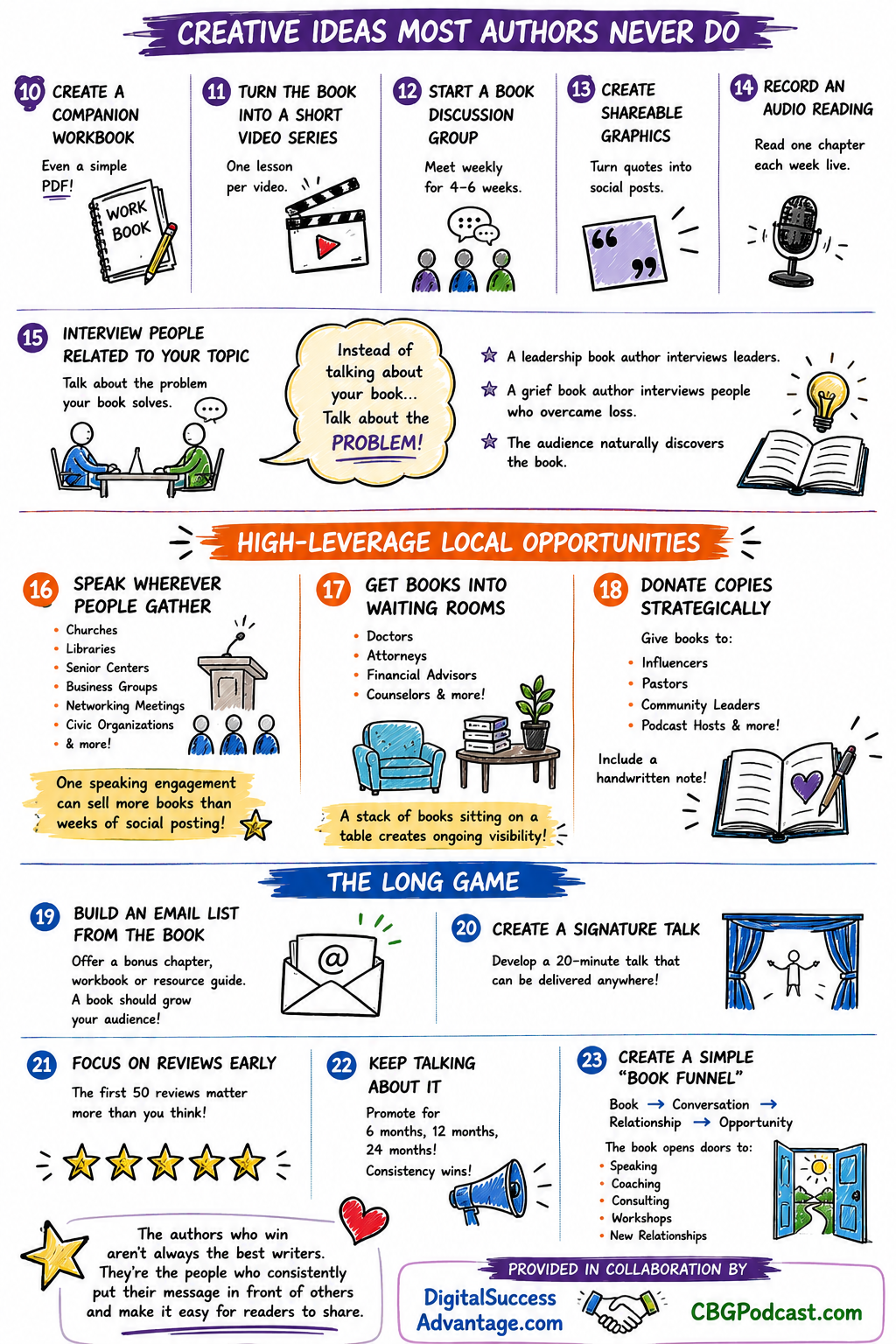
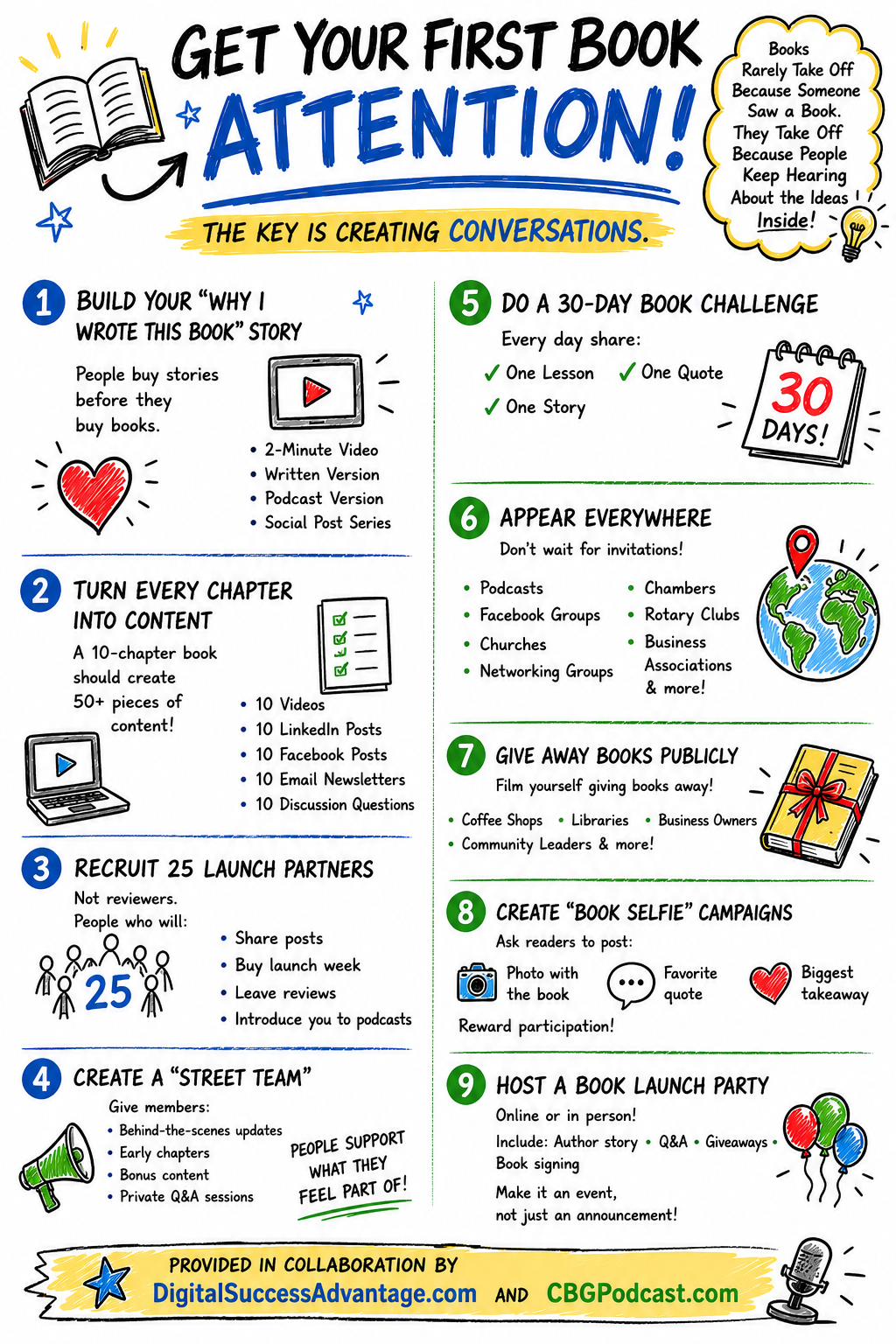
The episode also included a practical coaching moment for authors. Rev. Lyle reminded Gabriel that writing the book is only the beginning. A book does not sell simply because it exists. People need to know the story behind it, why it matters, and how it can help them.
One of Lyle’s first suggestions was for Gabriel to create a book trailer. Just as a movie trailer creates interest in a film, a book trailer can give people a quick, memorable reason to care about the message.
Lyle also encouraged Gabriel to tell his story on podcasts. Gabriel’s story is part of what makes the book compelling. He is a 14-year-old author trying to help young people understand financial literacy sooner. That is not just a topic. That is a message with a face, a voice, and a mission.
Another major suggestion was to build a launch team or street team. These are people who believe in the book and help spread the word by commenting, sharing, encouraging, and creating momentum around the release. Lyle also suggested workshops, book selfies, interviews, and even placing books in waiting areas where people naturally browse.
The heart of the advice was simple: the book is not the finish line. It is a tool that can open doors to conversations, workshops, speaking opportunities, and greater impact.
Key Takeaways
- Authors need to market the message, not just the book.
- Podcasts, trailers, launch teams, and workshops can create momentum.
- A book can lead to opportunities far beyond book sales.
BONUS: DOWNLOAD AUTHOR MARKETING TIPS FROM LYLE - No Optin, just download them below (right click and save):
📝 Full transcript here
Rev. Lyle
Hello and welcome to the Christian Business Growth Podcast. I'm here with 14-year-old Gabriel Santius the Third. He's written a book and he's gonna be talking to us about the book. So as we get started here, how did God get you started in the business, Gabriel?
Gabriel Saintus III
So how God got me started in this business was about two years ago, my parents, they were in the financial business and they always mentioned this word. They will always say, I wish I knew this sooner. I wish I knew this sooner. And so what I decided to do, I was like, well, why don't we give kids that opportunity to know it sooner, right? So that when they get older, they're financially prepared and they don't have to say, I wish I knew this sooner. Things would be different. No, things are different because they knew it sooner.
And so I saw an opportunity to kind of educate kids and that's what really got me into the business of writing this book.
Rev. Lyle
That's cool. And as a kid yourself, you're writing the book from the kid's perspective too. Tell us a little bit about that. What's different about you writing versus an adult writing a book?
Gabriel Saintus III
So what the difference between me writing and an adult writing is that I personally believe that I could really reach somebody in the sense of that, hey, this is someone who looks like me, acts like me in the sense of like same age category, versus somebody else who's way older, maybe talking about something way higher. Right? But then also we're bringing in factors that kids would normally think about, like
Maybe I want that bag, that certain thing that was super popular that everybody was buying. That's something that we can kind of educate you about. Is this really a sensible purchase or could you put that money somewhere else?
Rev. Lyle
Good point. And what's been your favorite part about the writing so far?
Gabriel Saintus III
My favorite part about writing so far definitely has to be reviewing it. Because when you're able to review it, you're able to hear it like yourself is like you're speaking yourself. And just realizing that this is not a dream anymore, this is something that's truly is happening. It's really exciting to see.
Rev. Lyle
And I know there's a lot of people listening that may have a little kid or somebody in their in their world that has thought that they might want to do something, but they're not sure. They're they're afraid to step out in faith. So tell us, how did you step out? What what was the thoughts that went through your head that may help you get started?
Gabriel Saintus III
So the thoughts in my head that kinda helped me get started was a couple things. First thing, I had support. I had lots of support from my parents that kept on saying, Hey, you gotta do this, you gotta do this. You know, I've seen so many people who they've had great opportunities, great ideas, but they slept on it and somebody else took it and they went big with it. And so just realizing then that that pressure, that emotion, once I get over it, it's like a hump, right?
You're there in the beginning and you're there at the end. Once you're finished, you're all good. But it's all in that pressure curve. Once you finish that pressure curve, you're good. And so one thing I just learned was that I just need to go over with it, you know, because what's it's gonna do to me? Either it's gonna help me or it's barely gonna do anything for me. It's not gonna hurt me.
Rev. Lyle
That's good point. I love that pressure curve because a lot of people don't realize that the pressure curve is something that it's just it's fake. It doesn't exist. If you analyze that fear and say, is this really fear, or can I turn this fear into excitement? Because all on how you determine to process how that that stress point happens in your life. I'm glad you pointed that out. That's good stuff. And where you at right now in your process of writing the book and your process of how it started from
Gabriel Saintus III
Mm-hmm.
Gabriel Saintus III (03:41.42)
Exactly.
Rev. Lyle
First line on the page, what's that process been like for you?
Gabriel Saintus III
Process has been very interesting. I want to say it seems like something fictional, even though you're actually typing and you're getting it done. It seems like something fictional, but then going through that process, talking to people, getting their feedback on it, knowing what I need to do. it's been a very interesting process because it shows you, like, hey, this is really happening. Get ready for it. yeah, that's really what's going on.
It's just been a very interesting process. We're at review I wanna say about four or five right now. And so just going through that process, making sure that everything's ready, going through editors, having people read it, and so that we make sure that it's ready to be released.
Rev. Lyle
Good deal. And in your book, what's bit what was your favorite chapter? Do you have a favorite chapter?
Gabriel Saintus III
My favorite chapter I want to say is called Debt Blocks. And the reason why I like this chapter is because this chapter talks about specifically how not all debt is bad. But it's only the debt that you spend on frugal things. Like for example, that bag. You couldn't afford it, so you decide to take debt on it. But what this teaches you is how to use that, how you can use that, for example, to buy a property, make money off that property, and then that property pays for your bag.
And I've always found that fascinating because everybody talks about how, you've got to work super duper hard. You gotta make sure you can make the monthly payment, make the monthly payment, or you can have something else to make that monthly payment. And so it's just been a very exciting chapter that I really like because not many people know about it.
Rev. Lyle (05:31.33)
Yeah, that's a good point. Rich Dad Poor Dad talks about do you buy assets or you buy liabilities? And assets put money in your pocket and a liability takes monies away. Like you're talking about, you go and buy that fancy whatever brand, we're not gonna mention brand names, but whatever brand name it is you like, you go and buy it just 'cause it's got a name on it, but you you're not making any money on it. It's just a waste of your money. And it's little things. I knew a young man one time, he he went and bought one of those vending machines, stuck it in his school because his school didn't have anything like that. And so he started making money on that.
instead of that same amount of money for this little body old moped thing he wanted and that money paid off the moped, paid off the the gas on the moped, et cetera, et cetera, et cetera. And so that's that's a good way to look at it. Look at I assets versus liabilities. So what's going on right now? Where are you at in the process and what's what's the next step for you?
Gabriel Saintus III
So that like I had mentioned a little bit, we're at about review four or five right now. And so we're just going through it, seeing what needs to be changed, getting feedback from people who are in the financial literacy area, people who work in real estate places, who people who understand what we're doing, so that we can get any feedback if there's anything that we need to tweak, anything that we need to change, so that it's truly sound in his words.
Rev. Lyle
Good deal. And how does faith play into what you do?
Gabriel Saintus III
Faith has played a major role, a major role in what I do. Because from the beginning, like I mentioned about the pressure curve, God helped me go through that. And so when I went to go talk to people, I didn't have that nervousness that most people would have on their first time because God truly brought me through. You know, kind of like David, you know, David wasn't afraid when he went to Goliath. God was ten feet tall, but because yet God
He knew that his God was bigger than the giant. It's the same thing that has played a role in my life here in this business, is that having God on your side truly helps get rid of that pressure curve.
Rev. Lyle (07:35.64)
I like that. Yeah. Leaning into scripture and everything, and I'm sure prayer was a huge part of that. And you got parents that are faithful that are probably praying for you, which I I'm telling you, people that have kids, if they're not praying for their kids, they're missing out on the blessings that come as God releases his spirit and starts to impact lives. Because you are impacting lives at 14, where a lot of people are sitting around playing video games, not doing anything with their lives. You said there's a story out there and somebody needs to be impacted.
Why don't we tell that story? I love that. So we're going to move into our section called the Business Growth Tips. And we're going to talk about, I know you haven't released the book yet, you're still in the process of, but let's talk about some things that you might want to do as you release the book. And I've got some suggestions too as a marketing guy. So we'll I'll kind of give you some tips and you'll give our audience some tips and we'll kind of work this together a little bit. So what's some things you want to do with your book to release it?
Gabriel Saintus III
I would say some growth tips is if you are thinking about starting something, right? What's the harm in it? What's truly the harm in it? The worst it's gonna do is not gonna make any money. May have taken maybe an hour of your time. But what if it works? What if it makes you successful? What if that plan that you were sitting on all that time made you successful, maybe where you are today? That's one growth tip. Another growth tip.
Is that throughout everything, put God first and always pay tithe. One thing I've learned is that no matter if I had five dollars or a hundred dollars in my wallet, if I always paid tithe, my wallet never ran empty. Never did. I may, yes, I may be close. I may have like thirty cents, but it's not empty.
And that's one thing I've learned is that no matter what the situation is, you always gotta put God first in your tithe and offering, put him first in your faith, put him first in the morning, put him first in your business deals, in everything, and he will lead your path.
Rev. Lyle
Good point. I love that. Yeah, what's the harm in starting? Because a lot people they wait. But the longer you wait, the less people you can impact. There might be somebody who needs you today that they never hear it because you waited months and months and months to do something. The quicker you get started, the quicker you get to success. And you know what? It's okay to fail. If your first one messes up, do another one. Who cares? What's going to hurt? Exactly. So as far as promotioning your book, getting your book out, I always tell authors one of the things I highly suggest is doing a book trailer. Think about a movie trailer.
Gabriel Saintus III
Mm-hmm.
Gabriel Saintus III
Exactly.
Rev. Lyle
But doing a book trailer for your book. another thing is tell your story. Why did you write the book? You've already started that in this podcast. That's exactly what you need to be doing, is telling other people in other podcasts. You should be reaching out to every Christian podcast saying, I'm a 14-year-old author, releasing a book, I'd love to tell my story and get as many people as you can. And you're very good on a podcast. You present yourself well, you handle questions well, you don't jump into them, you don't fumble through it.
Gabriel Saintus III
Thank
Rev. Lyle
You're very well versed. So I love the way you communicate. So you're doing great on that. I I look forward to seeing what you come up with in your book. And you're talking about doing some workshops, which I think is even cooler. Tell us about the workshop concept.
Gabriel Saintus III
So for our worship concept, we're thinking about kind of giving people a snippet of the education side, right? Because many people don't know, like we talked about, many people don't know about the financial literacy part. And so that's what Moneyblocks is doing throughout our financial workshops. We're gonna be educating people, giving people a snippet of what the book is gonna be talking about.
Rev. Lyle
And that's good because you're taking a platform and you're saying, Let me educate you here. If you want more, here's my book. It's available, hand it out. Yeah, it's a good process. Some people just say, I won't talk about any specific person, but they're like, I'm gonna write a book and I'm gonna put online, everybody's gonna buy it. That's not the way the world works always. And when it comes to book writing, your book may not make a million dollars, but what you do with that book is what's gonna make you the million dollars. You know, you may make a dollar, you people don't realize the
all the ins and outs that go into writing a book. Let's say you spent fifteen thousand dollars writing the book and getting it edited and everything, but you've got to sell how many copies to make that up.
But you may get one speaking engagement that pays you fifteen thousand dollars. You may get one workshop that wants you to come in and fill in for them, or you may work do a workshop and it makes you that fifteen thousand dollars. So it's all that what's called back end stuff that makes a lot of money when it comes to books. What else you thought about promoting your book? You have any other thoughts?
Gabriel Saintus III
Mm-hmm.
Gabriel Saintus III
so for promoting wise, we're gonna be going out and kind of asking people, you know, about their financial literacy. What do they know? You know, what can you do with a hundred dollars? And then kind of see and kind of put that out to put a name for the book so that people kind of understand where we're coming from, but also at the same time to gather knowledge about what people know. Do they know what to do with $100? Are they just gonna spend a hundred dollars?
Or what are they gonna do to invest it?
Rev. Lyle
That's a good point because you can take those interviews and create a whole nother book based on those interviews. That's how some very big books got started. They went out and interviewed people and that's that was the kickoff for the self help organization. what about launch partners? Have you done anything with launch partners?
Gabriel Saintus III
Exactly.
Gabriel Saintus III
Not that I know of at the moment.
Rev. Lyle
Okay. So a launch partner, you find 10 people who really love what you're doing. These become your your own disciples, your evangelists, whatever you want call them. And those people help you promote the book. So every time you say, hey, it's at the publication, hey, vote on this cover, whatever those 10 people or those 25 people, however many people you get, are always encouraging you, always commenting on those posts, always sharing those posts. Some should probably be your age, but some should also be older. And some in the financial sector, some in the homeschool sector. So think about those.
ways to cross platform what you're promoting and everything. that's also the idea of a street team. You're doing your interviews, but how many other people, what if you interview what if you had three other teenagers that could interview for you and with you? Now you're spreading the word and you're impacting other people because now you got other people helping you along the way and everything. As you book releases, a suggestion is create a book selfie campaign. So every time somebody reads a book, when you start
When you actually get the physical copy, every time somebody reads the book, ask them to take a picture of themselves holding the book up and give their opinion. Because that that face and that that image of that person holding that book is something that really helps people get get going. And of course, this is goofy, but think about this. Plant books, and I mean plant books, at places like doctor's offices, mechanic shops, chuck e cheese.
Gabriel Saintus III (14:33.03)
Okay.
Rev. Lyle
Why not? Put them in places where people are hanging out. Because if a teenager's got to go to Chuck E. Cheese with his little buddy, he's gonna be bored out of his wits sometimes, right? But if something like you have it hanging out, so think about those places where you start planting those books where people are just hanging out, just relaxing, they might just be sitting there waiting for the doctor or the or and they could pull up your book and kind of scan through it. And there's a lot of networks opportunities you can do with that. And you've already started going to networking. As a matter of fact,
Gabriel Saintus III
Yeah.
Rev. Lyle
You and I met at a networking party here in the local area. Your dad brought you and I saw you doing an interview at that, which I thought was impressive. Cause you took action, you met people, and you said, Hey, let's get this started. And I love that you're doing that, that you're taking action. What would you tell a young person who's been sitting on an idea and they're afraid to take action?
Gabriel Saintus III
Well, as one who was in that situation, I will admit I was, just take action. Cause what's the worst it could do? You know, it's kind of like I don't want to say it's like skidding, it's like indoor bungee jumping. Where the first couple build-up moments, you're like, this is big. But once you get down, you're like, it's okay, it was like a 20-foot drop, but it's okay, because I know I'm in safe hands. And so
Just go for it. Nothing's gonna stop you. You know, make sure you don't overshare. That's one thing. Make sure you don't overshare. Because if it doesn't go well, then there may be some people that just may be waiting on your downfall and you told them and now they're gonna come up in your face and tell you that you failed. So make sure that you don't overshare and just go for it.
Rev. Lyle
And people who are successful are not going to put you down. The people that put you down are the people who aren't doing anything with their lives and you're embarrassing them. So it's not always about you, it's about them. And that's so hard to say with teenagers, but it's true. So find those people who encourage you. Find people at your church. If your family can't support you, find people at your church that can support you. Go to business networking groups. Christian business networking groups exist. So if you're a Christian, find those networking groups, especially as a as a young person.
Gabriel Saintus III
Mm-hmm.
Rev. Lyle
Because those are the people gonna really pour into you and pray for you. And that on that note, find that little old lady at church that prays for everybody. Find her and have her put your name right up there so she could because you know that one's gonna pray for you every time. And she's gonna ask you about that book. And that's the woman you want praying for you. She's great. so as we wrap up here, let me just right quick, I'm gonna put a PDF download of 20 plus ideas that you can use to promote your book.
Gabriel Saintus III
Ha ha.
Rev. Lyle
along with a link to your book page and once you get started with all that stuff that'll be on there. And so if you're listening to his podcast, go find the episode with Gabriel Santis the third. And this will be episode 135. Find that on there and you'll find the link to that PDF as well as a link to his book as it becomes released. And maybe a link to a workshop when those things are available. It'll also show up on our podcast. Gabriel, what do you want to leave us with? What's your final thoughts?
Gabriel Saintus III
final thing I wanna leave with is you know, overcome nervousness. Yeah, that's one thing I've I was a little nervous before this and I mean going through it everything became more relaxed and I didn't become nervous. You know, so it's the same thing in business. You know, first thing first time you do a podcast, first time you do an interview, first time you make a business deal, you're gonna be nervous. And so just
Try to ignore it, try to overcome it because once you do it feels nice at the end.
Rev. Lyle
Great. Thanks for being with us.
Gabriel Saintus III
All right.