
Welcome to the Christian Business Growth Podcast where faith meets entrepreneurship. Each episode, we uncover the strategies, stories, and spirit-led insights that help Christian business owners align their goals with God’s call. From practical tips to real-life testimonies, we explore what it takes to build a business that honours Christ, serves others, and impacts the Kingdom.

Episode Summary
What happens when decades of corporate leadership experience collide with faith, coaching, and a passion for helping business owners rediscover their vision?
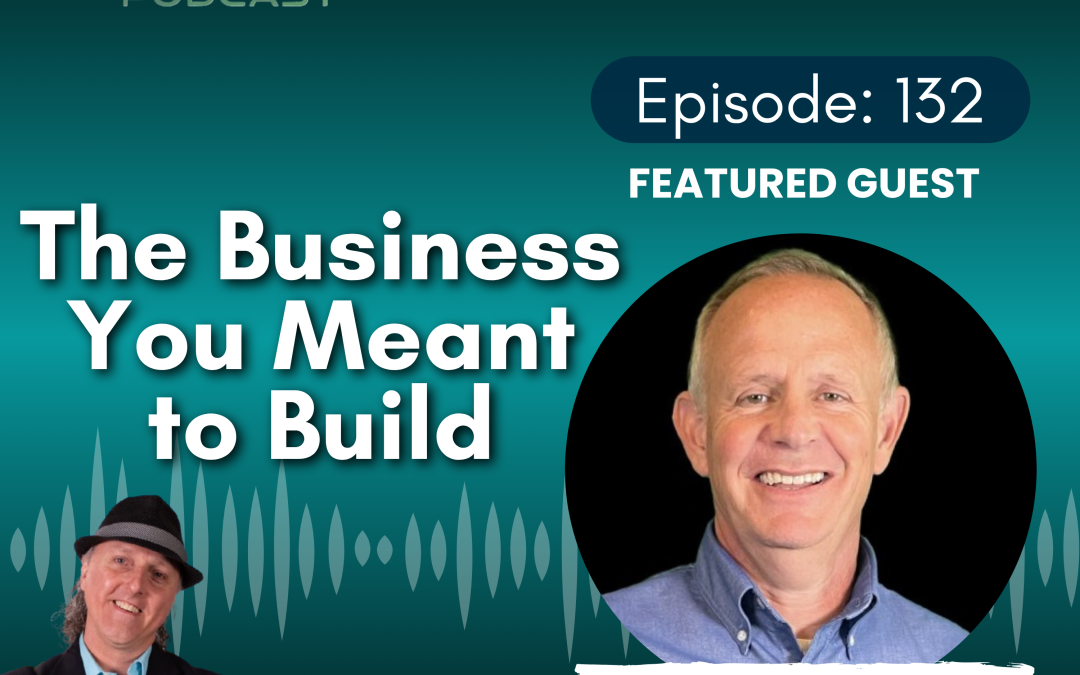
In this episode of the Christian Business Growth Podcast, Rory Sheppard shares his journey from leadership roles at companies like Whataburger, H-E-B, and AT&T to helping entrepreneurs build businesses that serve their lives instead of consuming them.
Rory discusses why so many business owners accidentally create a job for themselves, how leaders become the growth ceiling of their business, and why personal development is one of the most overlooked growth strategies available.
We also explore Rory's Anchor Points Journal, a unique approach that combines business planning with spiritual disciplines, including one powerful question that may change the way you pray:
"If all your prayers were answered today, would anybody besides you notice?"
Plus, Rory shares a hiring principle that has guided years of leadership success:
"Hire Hearts. Train Smarts."
If you're a business owner looking for practical growth strategies rooted in faith, leadership, and wisdom, this episode is packed with valuable insights.
💬 Sound Bites From This Episode
🔹 Rory Sheppard Quotes
- "Three years in or twenty years in, a lot of business owners don't own a business anymore. They own a job."
- "Your business will never outgrow your own capabilities and abilities."
- "Do only the things that only you can do."
- "We're great at giving God our to do list. We're not always great at noticing what He's already done."
- "If all of your prayers were answered today, would anybody besides you notice?"
- "Hire hearts. Train smarts."
🔹 Rev. Lyle
- "You have to work on your business, not just in your business."
- "I love seeing people blessed by God who then use their skills to bless other people. I think that is what we are called to do"
- "Integrating spiritual disciplines with business disciplines is something I'm very passionate about."
Episode Highlights
Building a Business, Not Just Another Job: Insights from Rory Sheppard
Transitioning from a corporate career to coaching can be challenging, yet rewarding. Many professionals find themselves feeling unfulfilled after years in the corporate world, longing for a more meaningful connection to their work. In this post, we’ll explore how Rory Sheppard made this transition, the lessons he learned along the way, and how you can apply these insights to your own career shift.
About Rory Sheppard
Rory Sheppard is an experienced business coach with a rich background in corporate roles, including finance and strategy at Whataburger. His journey into coaching was driven by a desire to help business owners reconnect with their original dreams. Rory’s unique approach focuses on small and medium-sized businesses, utilizing his extensive experience to guide his clients back to their passions.
The Importance of Networking
One key insight from Rory’s journey is the power of networking. He emphasizes that most of his career opportunities arose from connections rather than direct applications.
- Why Networking Matters:
Building relationships can open doors to opportunities you may not have even considered.
- How to Network Effectively:
Attend industry events, join professional organizations, and stay connected with former colleagues.
- Common Mistakes:
Don’t wait until you need something to reach out—cultivate relationships continuously.
The Transition from Corporate to Coaching
Rory’s transition from a corporate career to coaching was influenced by personal circumstances. He moved back to Amarillo to support his aging family members and sought ways to leverage his corporate experience in a new arena.
- Finding the Right Fit:
Rory utilized his background in training and development as a strong foundation for his coaching practice.
- The Role of Coaching Franchises:
He found success by joining Action Coach, which provided him with the necessary resources and support to thrive in his new role.
Creating Impactful Coaching Practices
Rory’s coaching approach focuses on helping clients remember their original vision for their businesses.
- Understanding Client Needs:
He works with various clients, from small business owners to Fortune 200 CFOs, understanding their unique challenges.
- The Power of Client Stories:
By sharing successful case studies, Rory illustrates how businesses can reclaim their dreams and work toward meaningful goals.
- Why It Matters: Helping clients rediscover their passion can lead to increased motivation and business growth.
Key Takeaways
- Network Actively:
Don’t underestimate the power of connections in your career.
- Leverage Your Experience:
Use your corporate skills to create a strong foundation for your coaching business.
- Focus on Client Impact:
Aim to help clients reconnect with their original business dreams and goals.
Wrapping up:
Transitioning from corporate life to coaching is not just about changing jobs; it's about finding fulfillment and purpose in your work. Rory Sheppard’s journey illustrates the importance of networking, leveraging past experiences, and creating meaningful relationships with clients.
If you're considering making a similar transition, reflect on your skills and network, and remember to focus on the impact you wish to create.
📝 Full transcript here
Rev. Lyle
Hello and welcome to the Christian Business Growth Podcast. I'm here with Rory Shepherd. He's an action coach in West Texas. So Rory, how did God get you into business?
Rory Sheppard
Well, I'll thank you first. excited to be here today. and then second, so how did I get into business? or in the business I'm in. I guess it's it's probably two different questions, but I spent most of my career in kind of corporate roles, starting off in IT, then moving to finance and accounting, and then spent my last few years kind of in strategy, building long-term strategy for Whataburger. But so
I like to share with folks that you know your network is is really key to kind of how you grow and develop in in business. and so out of all the the jobs that I had, there was only one that I really physically pursued and applied for. Every other job that I've ever had in my whole career has been a friend or an acquaintance or somebody reaching out to me and saying, Hey, we've got this position. Would you
Consider it, would you apply? Would you have a conversation with us about having this job? And so I moved to San Antonio 35 years ago for that one job that I applied for to work for a company called Builder Square. But every job after that has been a friend or acquaintance, somebody I work with, give me a call and saying, you know, would you consider coming over here and doing this job? And so
I would love to tell you that I had this grand plan on the roles that I was gonna have and the positions I was gonna have and the job I was gonna have. but it didn't work out that way at all for me. and I think I would like to say God had his hand in all those moves as opposed to it just being random. But I gotta work for, you know, phenomenal organizations, some of the best best businesses, best companies in the state of Texas. whether that was
ATT or H E B Grocery Company or Whataburger and a lot of different roles doing different things for them. and I think all of those, as I look back, I mean, there were key moments all along the way and learnings that I got along the way that I had to have so that I could do the business I'm doing now, which is doing business coaching. I do
Rory Sheppard
Small business coaching, small, medium business coaching, working with CEOs to kind of reclaim the the dreams that they had when they started their business. and you've seen this a hundred times, maybe a thousand times, where you talk to a business owner, they had hopes and dreams and these grand plans on what the business was going to be. And then three or four years in or twenty years in, they really just have a job. You know, they show up every day, do the job and go home. and they've kind of lost that.
the vision of what they wanted to do when they started. and I love to work with those business owners to rekindle that dream and get restarted on reclaiming some of the things that they wanted when they started.
So how I got to Amarillo, yeah, go ahead.
Rev. Lyle
So was I was gonna say, what was the transition like going from corporate into coaching world? What was that transition like for you?
Rory Sheppard
Yeah, so I was you know, I was it at Whataburger. I'd been there for seven years. we had done some great work, but we were at a spot where my mom was eighty-eight, still living on the family farm up here in the Panhandle of Texas, which is about six hundred miles from San Antonio. so quite a hike. and then my in laws, both my wife's parents, were here in Amarillo.
And they had gone from being the kind of the care team for fifty years at their church to being in a spot to where that they probably needed a little bit more care. and and so it was a good transition spot for us to to move back up from San Antonio to Amarillo. and so then I started looking for what I was gonna do when I got up here. I had been doing training kind of inside kind of
coaching and that kind of activity inside H E B and Whataburger for years. so I kind of started looking at what those opportunities could be here in the Panital area. I found Action Coach, which is a a franchise organization that's been around for thirty-three, almost thirty-four years now. they had some great intellectual property on structures and systems and process.
So really I bought the intellectual property so that I could get, you know, hit the ground running in the in the coaching world instead of building all that on my own. and then started adding clients. you know, whether those were kind of small individual CEOs. you know, I I love to talk about, you know, I've got everything from a no-kidding, coal-fired blacksmith operation that he's
He's not shooing horses all day every day, but I mean he's more of an artist, artisan kind of working with metal. first time I met with him, he said, I've got the coolest job in the world. I get to play with fire and hit stuff with a hammer. right. and so we really kind of redeveloped kind of everything from website to marketing to offerings to getting him in with some big wholesalers so that he was mass producing things as opposed to doing one off.
Rev. Lyle
All right.
Rory Sheppard
kind of artisan work. you know, and then I've got, you know, Fortune 200 company CFOs that I do executive coaching with. you know, most of those are through referrals. I mean, again, back to network. so critical for all of us, especially in the service industry, is that you really need to do good work so that you can get referrals and continue to feed that. and so that
That's kind of been the life that I've been leading for the last five years is coaching in that space. I do about twenty-five to thirty-five percent of my clients at any given time are nonprofits. so I'm working with executive directors, boards, teams on kind of we we have phenomenal nonprofits up here in this part of the world and we've got very generous people that live in our part of the country. But
They want to make sure that every dollar they give is being utilized in the best possible way. And so I love rolling up my sleeves and working with the nonprofit leaders to figure out how we can make them more efficient, more effective in using those dollars. And so that that's been a great opportunity for me as well. And it's a way for me to to pour in and give back. so that's a that's another space that I've been playing in for the
Really for five years now.
Rev. Lyle
Yeah. What's God doing right now in your business?
Rory Sheppard
So a handful of things. probably the the biggest is something that I shared with you a couple of weeks ago, which was the my Anchor Points journal. and so it's a kind of fifty-fifty kind of split down a kind of a faith-based spiritual rhythm and practice journaling document, and then more of a daily planner like you would see, whether it was
wherever you started with daily planners, whether that was Frank and Covey or you know, day runner or day planner or daytimer, there's been a whole bunch of those, but it's kind of a mix of those. And so I had been using tools like that for years. the more I spent time with clients, you know, time management, self management, we didn't really can't manage time, but self-management in time is always an issue and stuff.
So I started sharing with them some of the tools and techniques that I'd developed over you know 35 years in business. and they kept asking me, you know, why are you just giving me single sheets of paper? Why can't you put this on a in a journal that I can use? And so about a year ago, we created the first version of Anchor Anchor Points Journal, which is just that. So it's things that I found helpful, and then started sharing that with clients, you know.
Somewhere between 60 and 70% of my clients use it on a daily and weekly basis. but it starts with kind of daily anchors and disciplines on gratitude and kind of identity statements about yourself. 'cause if you can't say anything good about yourself, you know the world's not going to. So you're not gonna hear it in any given day if you're not affirming yourself.
But then there's a big piece of it that is just around the discipline of prayer. starting with capturing answered prayers. We're we're great at giving God our our menu of things he needs to do today. here's your to-do list. I want to I'll check back in on you tomorrow. but when he does the the phenomenal things in our lives, we don't ever take the time to acknowledge that. And so
Rev. Lyle (09:35.18)
Yeah.
Rory Sheppard (09:49.25)
I've gotten more feedback from clients and people that use the journal, just forcing them on a daily basis to go, what has God done in my life is crazy impactful. and then, you know, people I'm praying for, whether that's family or others, and then I can I can list those short term and long-term prayers for me. Craig Rochelle did a from Life Church, did a sermon series probably
Gosh, I don't even know. Eight or nine years ago now, eight years ago probably, on bold prayers. And one of the things that he challenged people to do was think about your prayers. And if all of your prayers today were answered, would anybody notice? anybody other than you, right? And so kind of the challenge to pray bigger prayers. and so that I've incorporated that in. I think that's
Rev. Lyle
Right.
Rory Sheppard
critical for us to pray those prayers that we have no idea how God could answer them because wouldn't it be cool if all those got answered.
Rev. Lyle
That's great. I love that concept. And that concept I've got I've got the anchor journal. I haven't used it yet because I've been on vacation. So I'm slacking there, I'll be honest. But I'm excited because I did see that you're you're integrating those spiritual disciplines in with your business disciplines, which is something I'm very passionate about. That's why this whole podcast exists.
Rory Sheppard
And then Yeah.
Rory Sheppard
Yeah.
Rory Sheppard
Yep, yeah. No, and I think you know, I mean and I'm very much a poster child for being, you know
one of those people that thought I had a, you know, I had a a business life and a business calendar, I had a personal life and a personal calendar. And then I had a spiritual life and a spiritual calendar. And they were like, you know, peas and mashed potatoes on your plate. They weren't supposed to touch, right? I mean they could be there all on the plate, but they weren't supposed to touch each other. And somewhere along the line, I finally got smart enough to realize that no, I'm just one person.
Rev. Lyle
Right.
Rev. Lyle
Right.
Rory Sheppard
And the more integrated I am in those disciplines, the better off I am. and so it's it's not only okay, it is very much more impactful for me if all those intertwine and intermix. and I I mean I've got phenomenal clients that are, you know, faith-based leaders that want to have an impact in the community. but integrating the spiritual disciplines makes makes me a better business person.
Rev. Lyle
Right. Absolutely.
Rory Sheppard
Me a better husband makes me a better parent, all those things. And so, you know, that's that started off as a an individual passion, and then a passion project for my clients. but that is probably an area that is growing in my business right now, and I can definitely see and feel you know, a drive and a and a push from God to say this needs to be a bigger part of what who I am and what I'm doing.
Rev. Lyle
Great. That's exciting. I love to see. I love to see when people are bl are blessed by God, then they take that skills level that they have and they bless other people. To me, that's that's powerful. So we're gonna move into our business growth concepts here. So what are some business growth tips you have for somebody who might be listening?
Rory Sheppard
One of the most common kind of conversations that I have with with business owners is, you know, they are they are great mechanics or they're great, you know, back to my blacksmith friend, I mean, great, you know, artists in that activity, but they may not be great business people. you know, they they learned an an activity, whether it's I've I've got a client that's got
seven restaurants now. He's a phenomenal, kind of entrepreneurial spirit, see has the vision, knows what he needs to do. but he didn't, I mean, he didn't even go. I mean, he didn't he didn't get a business degree, doesn't have marketing or accounting or any kind of that experience. And so it, you know, that gap can be a hindrance for us. and so the the business growth kind of space that I think most of us
need help in is the the business of running the business. not the activity that we do, but how do we make sure that we can open our doors, you know, tomorrow and next week and six months from now. And so
Rev. Lyle
Yeah, I tell people you gotta work on your business, not just in your business. That's a big difference.
Rory Sheppard
Absolutely. Absolutely. And so, you know, and on your, you know, what does on your business mean? Well, it's, you know, it's the it's those things that I activities that I have to do that are not the day-to-day service activities for the client. so whether that's marketing or it's accounting or reading, you know, improving myself, you know, your business will never outgrow your own capabilities or
Abilities, right? And so you have to continue to grow as a leader if you want your business to grow. Your team has to continue to grow as individuals if you want your business to grow. And so, you know, it seems in some cases it almost seems counterintuitive, but I need to be investing in learning for me and for my team all the time if I want my business to grow. And then there are times when I'm never going to be a good accountant.
Right. I mean, that right. Or I'm never gonna be great at marketing. Right. I mean, and so I need to hire that done. Right. And so another kind of I don't know if you've spent much time with Marcus Buckingham over the last twenty five years. He's written some phenomenal books. but all of them are kind of based on this idea of focus on your strengths, find those things that you are best equipped to do, and then do those.
Rev. Lyle
But you gotta know how to read financials, right?
Rory Sheppard
Right. Do only those things that only you can do. And then I need to be finding other people to do those other things. And and I can another kind of piece that we can think about is, you know, what is my as a as CEO, as a leader, as a department manager, right? what is my hourly rate? and then if there is an activity that I can hire done for lower than my hourly rate, I should do that.
So that I can do those things that only I can do. because that multiplication factor of allowing somebody else to do the work that they can do and then multiplying the work that I can do, that truly allows you to move from incremental growth to exponential growth. and so a
And don't be a sh I mean, you know, we live in Texas. we're very proud of who we are and what we do and pull ourselves up by our bootstraps and do the work on our own and all those kind of things, but I shouldn't be afraid to ask for help and I shouldn't be afraid to, you know, delegate some of those activities that maybe even activities that I love doing. but there's higher value work for me doing something else.
Rev. Lyle
I think it was Henry Ford. He said I'd rather have one hour from a hundred different people than a hundred hours from myself. Something to that effect.
Rory Sheppard
Yeah, no, yeah. Yeah. But that absolutely. And I because I will get tired, right? I mean, no matter what I do to take care of my, you know, physically, emotionally, spiritually, all those things, I'm still gonna get tired. and there's always more than enough work.
Rev. Lyle
Yeah, it's
Rev. Lyle
Yes, sir. Well, as we start to end up here, so what's a tidbit of wisdom you want to leave us with, and how can someone get in touch with you?
Rory Sheppard
So a tidbit of wisdom. you know, I think more so today than ever, the people that we surround ourselves, the people that we're hiring to be on our teams, is is critical for us to get the right person. and unless you're hiring, you know, somebody to be a a doctor or a CPA or some, you know, needs some specific initials behind their name, I would tell you that.
Over all the years that I've been hiring people, the the one thing that seems to to be this the most wise for me to do is always hire the heart with the idea that I can train the smarts. you know, and so I cannot I cannot teach you passion for the job, care for the customer, a deep care and concern for me as an individual or the business. And so
I need to go through a hiring process that identifies that with the idea that I can teach you those other things. and so that would be the wisdom that I would share is that Hire Hearts Train Smarts has been a key piece for me. I would love to say my whole career, probably the last 15 or 20 for sure. I finally got smart enough to figure out that the resume was not the reason I needed to hire somebody. but really what's inside them, the character.
Right. I mean, I've I've fired way too many people in my career. only ever one of them was because of technical capability. all the rest of them have been truly something around character, right? you know, they lie, they cheat, they steal, they abuse other people, right? I mean, whatever that is. they try to take advantage of the business. So I need to hire the heart, and the other part will come.
Rev. Lyle
I like that. How can we get in touch with you?
Rory Sheppard
Yeah, so most active on LinkedIn. so and I can get you a link, but just LinkedIn slash Rory Shepherd. my website is westexas.actioncoach.com. and so those are the two places that you can find me, interact with me, engage with me. and would just love I mean if you've got questions about business, questions about team, training.
I can be your training department. I love doing coaching and training with teams. and so those would be the ways that you can to reach out to me. LinkedIn, you can find me there or my website. You bet. Thank you, Lyle.
Rev. Lyle
Great. Well thank you for being with us. Thank you for sharing your story.